Moving cargo into or out of Singapore involves more than arranging transportation. Before goods can be imported, exported or transhipped, businesses need to ensure that the correct declarations, permits and supporting documents are in place.
For companies unfamiliar with customs clearance in Singapore, mistakes such as using an incorrect HS code, missing a permit requirement or submitting inconsistent documents can delay cargo and create additional administrative work.
Singapore uses TradeNet, its national single window for trade declarations, to process import, export and transhipment permit applications. Businesses may submit declarations themselves if appropriately registered or appoint a Declaring Agent to handle permit applications on their behalf.
This guide explains the key customs clearance requirements importers and exporters should understand before moving goods through Singapore.
What Is Customs Clearance in Singapore?

Customs clearance is the process of ensuring that goods entering or leaving Singapore meet the applicable customs and regulatory requirements.
Depending on the shipment, this can involve:
Import or export permits
TradeNet declarations
HS code classification
Commercial invoices
Packing lists
Bills of Lading or Air Waybills
Certificates of Origin
GST and duties
Licences or approvals for controlled goods
Supporting documents requested by Singapore Customs or another Competent Authority
For many businesses, customs clearance takes place alongside freight forwarding.
The freight may be physically ready to move, but incomplete or incorrect documentation can still prevent the shipment from progressing as planned.
That is why customs preparation should begin before the cargo reaches the port, airport or land checkpoint.
Do You Need a Customs Permit in Singapore?
In general, businesses importing goods into Singapore need a Customs Import Permit submitted through TradeNet.
Before applying, the business must have a Unique Entity Number (UEN) and activate its Customs Account. It can then either appoint a Declaring Agent or, if properly registered as one, submit declarations itself.
Singapore Customs similarly requires export permit applications to be made through TradeNet for goods being exported from Singapore.
The exact permit type depends on the movement of the goods.
For example, customs requirements can differ depending on whether cargo is:
Imported for local consumption
Stored under a duty-suspension arrangement
Temporarily imported
Re-exported
Transhipped through Singapore
Subject to special regulatory controls
Businesses should therefore avoid assuming that every shipment follows exactly the same customs process.
How Does the Singapore Customs Clearance Process Work?
While the exact workflow depends on the cargo and mode of transport, businesses can generally think of customs preparation in several stages.
1. Confirm Your Business Is Ready to Import or Export
A Singapore entity intending to conduct import or export activities generally needs a UEN and an activated Customs Account.
If you appoint a Declaring Agent, the agent can submit customs permit applications on your behalf.
This should be arranged before your first shipment rather than when the cargo is already arriving.
2. Identify the Correct HS Code
Goods need to be classified using the appropriate Harmonised System (HS) code.
The HS code can affect:
Customs declarations
Duty treatment
Regulatory requirements
Whether the product is controlled
Applicable permits or licences
Incorrect classification can lead to incorrect declarations or delays while the information is corrected.
Singapore Customs specifically advises traders to confirm the status and classification of their goods before applying for permits.
If you are uncertain about the classification, raise the issue with your Declaring Agent or freight forwarder before submitting the permit.
3. Check Whether the Goods Are Controlled
Not every product can be imported or exported under standard customs procedures.
Some goods are controlled by other government agencies, referred to as Competent Authorities.
Depending on the commodity, additional licences, approvals or product-specific requirements may apply.
Singapore Customs recommends checking controlled or restricted goods using the relevant HS or Competent Authority product codes before submitting the declaration.
This is particularly important because obtaining a customs permit does not automatically replace other regulatory approvals that may be required.
4. Prepare the Supporting Documents
The information across your documents should match.
Common customs and freight documents include:
Commercial invoice
Packing list
Bill of Lading
Air Waybill
Customs permit
Certificate of Origin
Relevant licences or permits
Product declarations where required
Singapore Customs identifies the commercial invoice, packing list and relevant transport document among the key supporting documents used for cargo clearance.
A common operational problem occurs when information differs between documents.
For example:
The invoice shows a different quantity from the packing list.
The consignee name does not match the permit.
The cargo description is too vague.
The shipment weight differs significantly between documents.
The transport document contains incorrect consignee information.
Checking these details before the cargo cutoff can reduce the risk of corrections later.
What Documents Are Commonly Needed for Customs Clearance?

Commercial Invoice
The commercial invoice records important transaction details relating to the goods.
Depending on the shipment, it commonly contains information such as:
Seller and buyer
Description of goods
Quantity
Value
Currency
Country of origin
Incoterm where relevant
The product description should be specific enough to properly identify the goods.
Descriptions such as “parts”, “items” or “samples” may not provide enough information for classification or customs purposes.
Packing List
The packing list explains how the goods are physically packed.
It commonly includes:
Number of cartons or pallets
Package contents
Gross weight
Net weight
Dimensions
Marks and numbers
The information should correspond with the commercial invoice and physical cargo.
Bill of Lading or Air Waybill
For sea shipments, a Bill of Lading is commonly used.
For air shipments, an Air Waybill is used.
These transport documents contain details about the shipper, consignee, cargo and movement of the shipment.
Singapore Customs includes the Bill of Lading or Air Waybill among relevant cargo-clearance supporting documents depending on the mode of transport.
Customs Permit
The relevant customs permit records the approved trade declaration.
For imports, businesses or their Declaring Agent submit the permit application through TradeNet.
The declaration must reflect the actual shipment correctly.
Certificate of Origin
A Certificate of Origin may be required in some transactions to establish where goods originate.
It can also be relevant where preferential tariff treatment under a trade agreement is being claimed.
Not every shipment requires one, so businesses should confirm the applicable requirement based on the cargo, destination and trade arrangement.
What Are Duties and GST on Imports into Singapore?

Imported goods are generally subject to GST, while certain categories of goods are also subject to customs or excise duty.
Singapore Customs identifies four broad categories of dutiable goods:
Intoxicating liquors
Tobacco products
Motor vehicles
Petroleum products
Other imported goods are generally non-dutiable but may still be subject to GST.
The amount payable depends on factors such as:
Customs value
Commodity
Applicable duty rate
Freight and insurance values where relevant
Available reliefs or schemes
Businesses should avoid estimating customs charges based only on the purchase price of the goods.
The appropriate customs valuation and tax treatment should be checked as part of shipment planning.
What Is TradeNet?
TradeNet is Singapore's national single window for trade declarations.
It is used for import, export and transhipment regulatory submissions and allows applications to be routed electronically to the relevant authorities.
Through TradeNet, Declaring Agents can submit applications and handle functions such as:
New trade declarations
Permit amendments
Permit cancellations
Refund applications
Permit status checks
For many importers and exporters, their appointed Declaring Agent manages the TradeNet declaration as part of the customs clearance process.
However, the importer or exporter is still responsible for providing accurate shipment information.
Using an agent does not make incorrect commodity values, product descriptions or consignee details disappear.
Common Customs Clearance Mistakes to Avoid

Using the Wrong HS Code
An incorrect HS classification can affect duties, permits and regulatory requirements.
Businesses should confirm their product classification before the shipment reaches the clearance stage.
Submitting Inconsistent Documents
The commercial invoice, packing list, transport document and customs declaration should describe the same shipment.
Even simple differences can create unnecessary clarification or amendments.
Not Checking Whether Goods Are Controlled
A standard customs permit may not be the only requirement.
Some commodities need approval from the relevant Competent Authority before they can be imported, exported or transhipped.
Waiting Until the Cargo Arrives
Customs clearance should not begin only when a container reaches Singapore or air cargo lands at Changi.
Permit and document requirements should be reviewed before shipment whenever possible.
Providing Vague Cargo Descriptions
“Machine parts” is less useful than a clear description of what the goods actually are.
Accurate descriptions help with HS classification, regulatory checks and customs declarations.
Assuming Your Freight Forwarder Already Has Every Detail
Freight forwarders and Declaring Agents depend on information provided by the shipper, consignee and other parties.
If your product, quantity, value or Incoterm changes, inform the operations team before the declaration is submitted.
Import Customs Clearance vs Export Customs Clearance
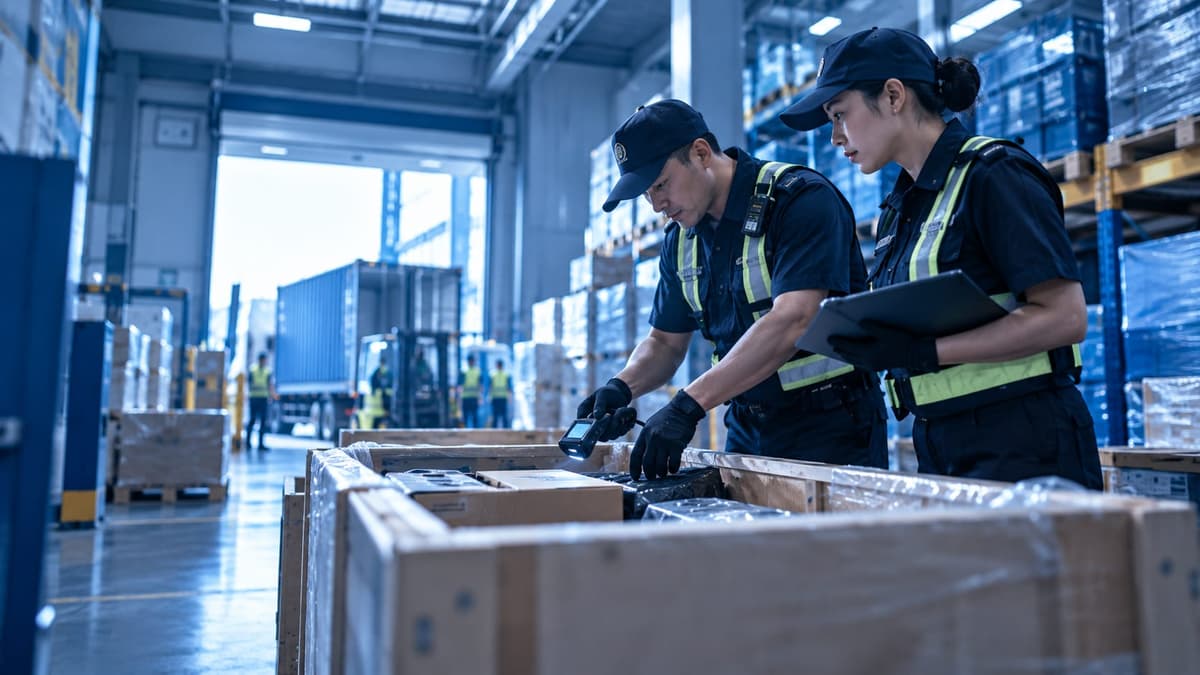
Although both processes involve customs declarations, imports and exports have different operational considerations.
Import Clearance
Businesses importing into Singapore should consider:
Import permit requirements
HS classification
Controlled goods requirements
Customs value
GST and duties
Cargo-clearance documents
For goods arriving by air or land, Singapore Customs may require documents such as the customs permit, commercial invoice, packing list and relevant transport document to be presented for verification depending on the shipment and permit conditions.
Export Clearance
Exporters should similarly prepare:
Correct commodity classification
Export permit information
Commercial invoice
Packing list
Transport documentation
Relevant licences or Certificates of Origin where required
Singapore Customs allows businesses to appoint a Declaring Agent to submit export permits through TradeNet on their behalf.
What Information Should You Give Your Freight Forwarder?
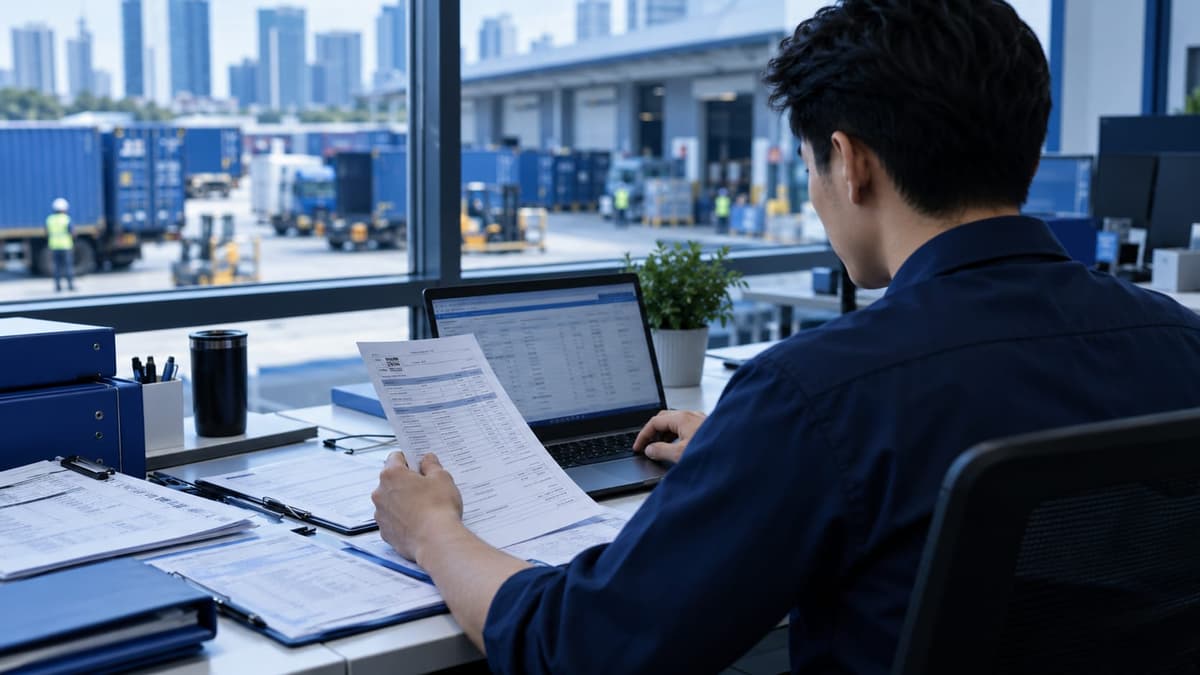
Before requesting customs or freight support, prepare:
Shipper details
Consignee details
Cargo description
HS code, if known
Country of origin
Cargo value
Quantity
Weight
Number of packages
Incoterm
Commercial invoice
Packing list
Relevant permits or certificates
Transport mode
Origin and destination
The earlier this information is available, the easier it is for the operations team to identify possible document issues.
Zhenghe Logistics' customs workflow starts by reviewing the commodity, HS code, shipper, consignee and Incoterm information, followed by checking commercial documents against booking and transportation instructions.
How Zhenghe Logistics Can Help With Customs Clearance
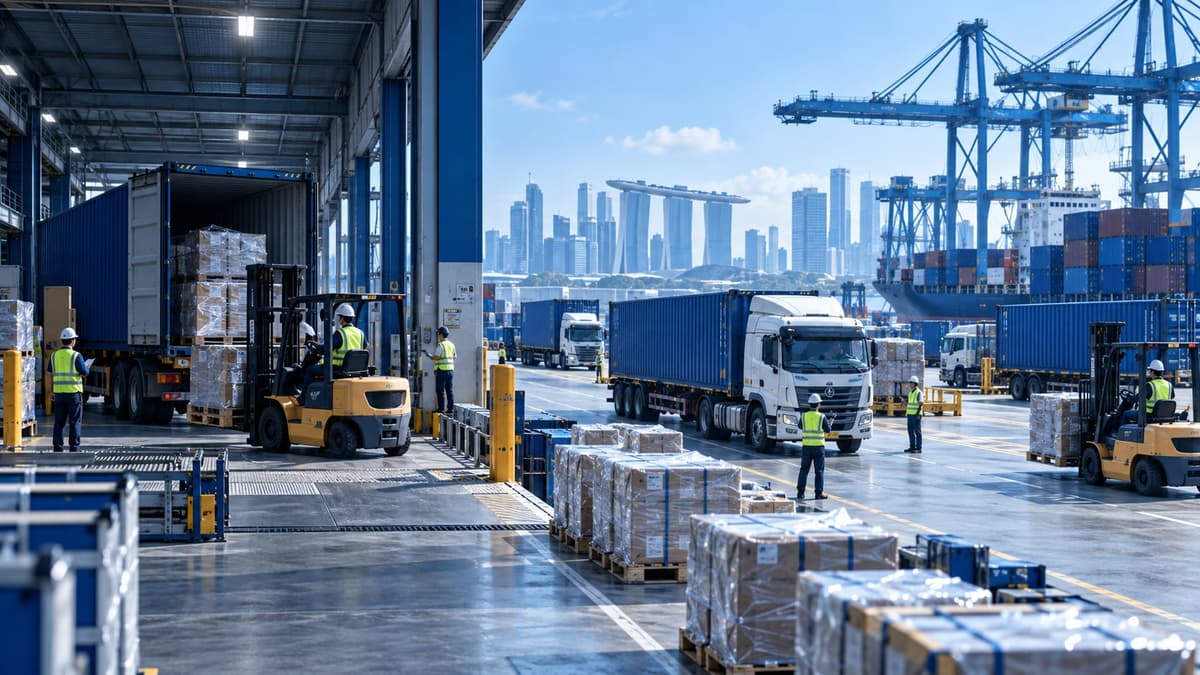
Zhenghe Logistics provides customs and freight documentation support for businesses moving cargo through Singapore and Indonesia.
Its current customs service covers practical customs coordination, permit checks and document alignment across sea, air and road shipments.
The process can include reviewing:
Commercial invoices
Packing lists
Bills of Lading or Air Waybills
HS code information
Certificate of Origin requirements
Permits and licences
Product declarations
Shipper and consignee details
Incoterms
The objective is to identify document exceptions before the cargo reaches an operational deadline.
Zhenghe also provides customs support alongside its broader freight forwarding services, including sea freight, air freight, Singapore-Malaysia trucking, warehousing and project cargo.
This can be particularly useful when customs clearance is only one part of a larger shipment requiring transport, storage and final delivery coordination.
Frequently Asked Questions
How does customs clearance work in Singapore?
Businesses importing or exporting goods generally need to submit the appropriate customs declaration through TradeNet. Importers and exporters can appoint a Declaring Agent to make permit applications on their behalf or register to submit declarations themselves. The shipment must also comply with applicable documentation, tax and regulatory requirements.
What documents are needed for customs clearance in Singapore?
Common documents include the customs permit, commercial invoice, packing list and transport document such as a Bill of Lading or Air Waybill. Certificates, licences or other approvals may also be required depending on the commodity.
Do I need a customs permit to import goods into Singapore?
Generally, goods imported into Singapore require a Customs Import Permit submitted through TradeNet. The appropriate permit depends on the goods and type of movement.
Can a freight forwarder handle customs clearance?
A freight forwarder may provide customs and documentation support and coordinate permit applications through the appropriate declaring process. The exact service depends on the provider. Importers and exporters still need to supply accurate cargo, commercial and consignee information.
What happens if my goods are controlled?
Controlled goods may require additional approval, licence or authorisation from the relevant Competent Authority. Businesses should check the applicable requirements before submitting the customs declaration and before the shipment moves.
This guidance is indicative. Carrier space, cutoffs, handling requirements and destination conditions should be confirmed for each movement.