
Choosing the right freight forwarder in Singapore can have a direct impact on your shipping costs, delivery schedules and day-to-day operations. A freight quote may look attractive at first, but price alone does not tell you how well a forwarder will handle documentation, customs requirements, unexpected delays or communication once your cargo starts moving.
For importers, exporters and businesses managing regular shipments, the better question is not simply, “Who offers the cheapest rate?” It is, “Which freight forwarder can reliably support the way our business ships?”
Before appointing a freight forwarding company in Singapore, ask these seven questions to understand what you are really getting.

1. Do You Handle the Routes and Cargo We Regularly Ship?
Start with your actual shipping requirements.
A freight forwarder may provide international shipping services, but that does not necessarily mean every provider has the same experience or operational coverage across every route, cargo type or mode of transport.
Before requesting a quote, prepare basic shipment information such as:
Origin and destination
Cargo type or commodity
Number of packages or pallets
Weight and dimensions
Preferred mode of transport
Expected shipment frequency
Cargo-ready date
Any special handling requirements
If your company regularly moves goods between Singapore and other ASEAN markets, ask specifically about those trade lanes.
For example, Zhenghe Logistics supports sea freight, air freight, Singapore-Malaysia trucking, regional sea forwarding and door-to-door freight handling between Singapore and Indonesia. Its current services also include weekly feeder transportation from Singapore to selected Indonesian destinations.
The important point is to find a freight partner whose capabilities match the routes your company actually uses.
2. Which Shipping Method Is Best for Our Cargo?
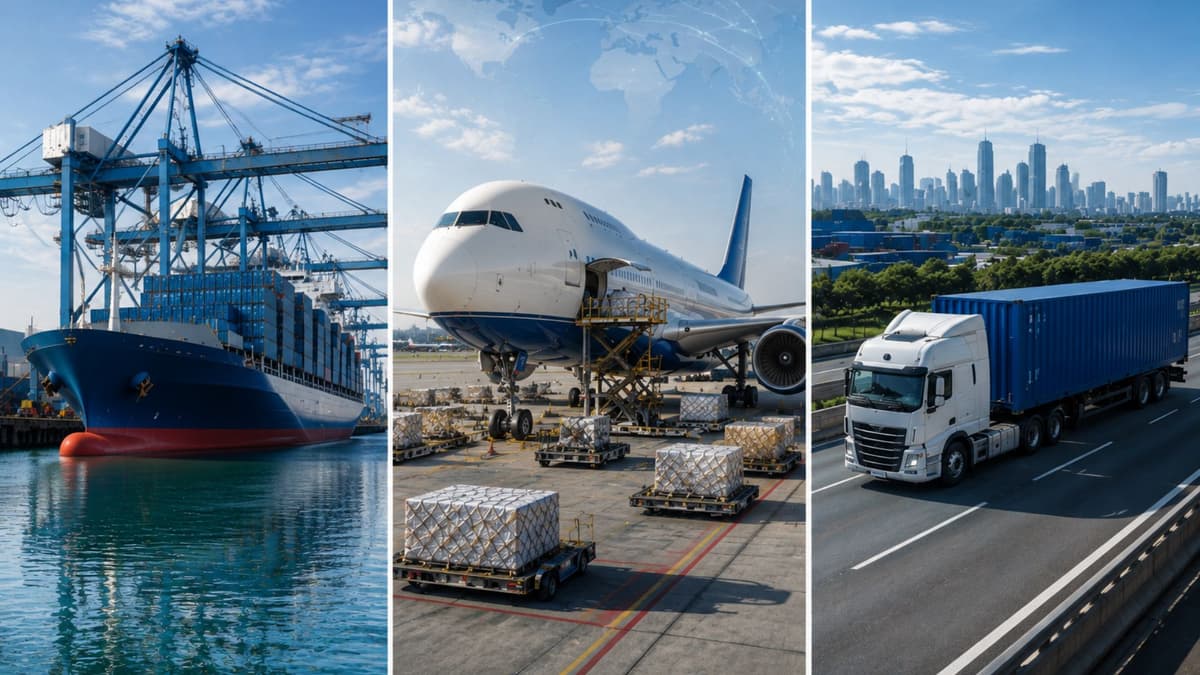
A good freight forwarder should not simply provide a rate. They should be able to help you understand which shipping option makes sense for your cargo.
For most international shipments, businesses may be comparing sea freight and air freight. Regional shipments may also involve road transport.
Sea freight
Sea freight is commonly considered for larger shipments where transit time is less critical and businesses want to manage transportation costs more efficiently.
Depending on the amount of cargo, your freight forwarder may recommend:
FCL (Full Container Load) for shipments using a full container
LCL (Less than Container Load) where your cargo shares container space with other shipments
Zhenghe currently provides both FCL and LCL sea freight options, including port-to-port and door-to-door movements.
Air freight
Air freight may be more appropriate when the shipment is urgent, time-sensitive or needs to reach its destination faster.
Zhenghe's current air freight services include worldwide imports and exports, cargo clearance and door-to-door options.
Road freight
For cargo moving within the region, road transport may also be an option. Zhenghe currently provides domestic and cross-border road freight services, including Singapore-Malaysia trucking.
Instead of asking only, “Which option is cheapest?”, ask:
“Which transport mode gives us the best balance of cost, timing and operational requirements?”
That conversation can help you make a better shipping decision before the cargo is booked.
3. What Exactly Is Included in the Freight Quote?

This is one of the most important questions when comparing freight forwarding services in Singapore.
Two quotations may show similar headline freight rates but include different services.
Depending on your shipment, a quotation may involve costs related to:
Main freight
Origin handling
Destination handling
Collection
Final delivery
Documentation
Customs clearance
Terminal handling
Warehousing
Cargo handling
Additional carrier charges
Before accepting a quote, ask the forwarder to clearly identify what is included and what is not.
You can also ask:
“Are there any additional charges that could occur after the shipment is booked?”
This does not necessarily mean every possible additional cost can be predicted. Freight conditions, cargo changes and carrier requirements can affect the final amount.
However, a clear quotation should help your business understand the expected scope of service instead of comparing providers based only on one number.
Look at total logistics cost, not only the freight rate
The lowest transport rate may not be the lowest overall cost.
For example, a quote may appear cheaper but exclude collection, documentation or destination-related services that another provider already included.
Compare quotations on a like-for-like basis before making your decision.
4. How Will Customs Clearance and Documentation Be Handled?
International freight involves more than physically moving cargo.
Documentation and customs requirements can affect whether cargo moves according to plan.
For imports into Singapore, a Customs Import Permit is generally submitted through TradeNet, and businesses may appoint a Declaring Agent to submit permit applications on their behalf. Singapore Customs also identifies documents such as commercial invoices, packing lists and Bills of Lading or Air Waybills as important trade and cargo-clearance documents depending on the shipment.
Before working with a freight forwarder, ask:
What documents do we need to provide?
Which documents will you prepare or process?
Do we need any permits?
Are there special requirements for our cargo?
When must the documents be submitted?
Who will alert us if information is missing?
For controlled goods, additional requirements from the relevant Competent Authorities may also apply, so correct classification and early document preparation matter.
Zhenghe currently provides customs clearance and documentation services covering areas such as import and export permits, documentation processing and customs-related support.
For businesses that do not handle international shipping every day, having a freight partner that can explain the documentation process clearly can reduce unnecessary back-and-forth.
5. How Will We Track the Shipment and Receive Updates?
Good communication becomes especially important after the cargo leaves your warehouse or supplier.
Ask the freight forwarder exactly how your team will receive shipment updates.
Questions worth asking include:
Will we have a dedicated operational contact?
How do we check our shipment status?
Which shipment milestones will be communicated?
What happens if a vessel or flight schedule changes?
Who should we contact if there is an urgent issue?
How are exceptions or delays escalated?
Tracking is useful, but tracking information alone does not solve operational problems.
What matters is whether someone is monitoring the shipment and can explain what the next step should be when something changes.
Zhenghe's current freight workflow combines online shipment information with staff review. Its website describes cargo details, routes, timing and special handling requirements being reviewed before commitments are made, followed by shipment references and milestone tracking once bookings progress.
When comparing freight forwarders, look at both the technology available and the people responsible for managing the shipment.
6. What Happens If the Shipment Does Not Go According to Plan?
Freight movements do not always proceed exactly as expected.
Changes can occur because of factors such as:
Carrier schedule changes
Missed cutoffs
Documentation problems
Cargo discrepancies
Space availability
Customs requirements
Port or terminal disruptions
Issues during cargo handover
Instead of asking a freight forwarder to promise that delays will never happen, ask how they respond when something does.
For example:
“If our original shipping option becomes unavailable, what happens next?”
A useful answer should explain the process for reviewing the problem, communicating it to you and identifying the next available option.
This is especially important for time-sensitive shipments. Your operations or procurement team needs enough information to make decisions instead of finding out about an issue only after it has already affected customers or production schedules.
Zhenghe states that its regional forwarding process checks route feasibility, partner coverage, cargo constraints, space, documents and cutoff timing before confirming a workable option.
That type of operational review is worth asking about when comparing any freight forwarding company.
7. Can the Freight Forwarder Support Us as Our Needs Grow?
The freight forwarder you choose today may become part of a much larger supply chain later.
Perhaps you currently need only one sea freight shipment. In the future, you may require:
Regular FCL or LCL shipments
Air freight
Cross-border trucking
Warehousing
Inventory handling
Customs clearance
Distribution
Door-to-door logistics
Project cargo support
Working with multiple providers is sometimes necessary, but it can also create additional coordination between warehouses, carriers, customs agents and delivery teams.
Before appointing a long-term logistics partner, ask what other services are available if your requirements change.
Zhenghe's current service offering covers sea freight, air freight, land transport, warehousing and distribution, feeder services, documentation processing, customs clearance and door-to-door freight solutions. Its Singapore operations also include a Woodlands warehouse.
The goal is not necessarily to choose the provider with the longest service list. It is to choose one whose capabilities are relevant to your supply chain now and potentially later.
Common Mistakes When Choosing a Freight Forwarder in Singapore

Even experienced businesses can focus on the wrong factors when comparing logistics providers.
1. Choosing based only on price
A low freight rate is attractive, but make sure you understand the complete scope of the quotation.
Compare what each provider includes before choosing the cheapest option.
2. Giving incomplete shipment information
A freight forwarder can only assess a shipment based on the information provided.
Incorrect cargo dimensions, weight, commodity details or destination information can affect routing and quotation accuracy.
3. Waiting until the cargo is ready
Do not wait until your shipment is sitting at the warehouse before discussing documentation, routing and transport options.
Earlier planning gives both your team and the forwarder more time to identify potential requirements.
4. Ignoring communication
Many businesses focus on price and transit time during the quotation stage, then discover later that getting a shipment update is difficult.
Ask about communication before booking.
5. Assuming every forwarder is equally strong on every route
Freight forwarding is highly operational.
A provider that works well for one type of shipment may not necessarily be the right partner for another. Discuss your regular destinations, cargo and expected volume before making a longer-term decision.
What Information Should You Prepare Before Asking for a Freight Quote?
You can make the quotation process easier by preparing the key shipment details first.
Try to provide:
Origin: Where is the shipment coming from?
Destination: Where does it need to go?
Cargo: What are you shipping?
Quantity: How many cartons, pallets or containers?
Weight: What is the total gross weight?
Dimensions: What are the dimensions of each package or pallet?
Cargo-ready date: When will the goods be ready?
Transport preference: Sea, air or road, if known
Incoterm: If already agreed with the buyer or supplier
Special requirements: Temperature control, oversized cargo or other handling considerations
If you are unsure which freight option you need, that is also something you can discuss with the forwarder.
A good starting point is to provide accurate cargo information and explain what matters most to your business, whether that is cost, delivery timing, flexibility or simpler coordination.
How Zhenghe Logistics Can Help
For businesses looking for a freight forwarder in Singapore, Zhenghe Logistics provides support across multiple stages of the cargo journey.
Its current services include sea freight, air freight, Singapore-Malaysia trucking, regional sea forwarding, warehousing, customs and documentation support, feeder services and door-to-door logistics.
Rather than looking only at the freight rate, Zhenghe's current process is designed around reviewing the route, cargo details, timing and operational requirements before a shipment is confirmed. Shipment requests can then move through booking review and tracking as the cargo progresses.
If your business regularly imports, exports or moves cargo across Singapore and the region, discussing these requirements early can help determine which freight solution is appropriate for the shipment.
Frequently Asked Questions
How do I choose a good freight forwarder in Singapore?
Look at more than the freight rate. Check whether the forwarder handles your regular routes and cargo types, what is included in its quotation, how documentation and customs requirements are managed, how shipment updates are communicated and what happens when an operational problem occurs. The right provider should match the needs of your supply chain rather than simply offer the cheapest initial quote.
What does a freight forwarder in Singapore do?
A freight forwarder coordinates the movement of cargo between origin and destination. Depending on the provider and shipment, services can include sea freight, air freight, road transport, customs clearance, documentation, warehousing and final delivery. The freight forwarder helps coordinate the different parties and processes involved in moving the shipment.
What should I provide when requesting a freight quote?
Prepare the shipment origin and destination, cargo description, quantity, weight, dimensions, cargo-ready date and preferred shipping method if known. You should also provide the applicable Incoterm and any special cargo requirements where relevant. More complete information helps the freight forwarder assess routing and requirements more accurately.
Should I choose the cheapest freight forwarder?
Not automatically. The cheapest headline freight rate may not include the same services as another quotation. Compare transportation, handling, documentation, customs-related support, collection, delivery and any possible additional charges. Communication and operational support should also be part of your decision.
When should I contact a freight forwarder?
Contacting a freight forwarder before the cargo-ready date gives more time to review routing, shipment requirements, documentation and available transport options. This is particularly useful for recurring shipments, special cargo or movements where timing is important.
This guidance is indicative. Carrier space, cutoffs, handling requirements and destination conditions should be confirmed for each movement.